How to Know Which Area in Upper Tail to Use
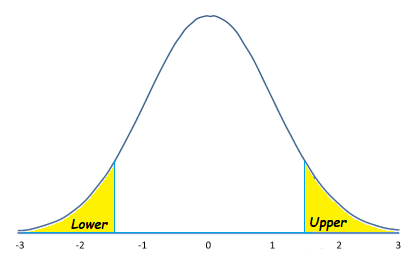
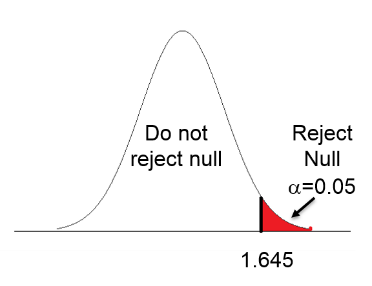
If you graph any distribution on a Cartesian plane the highest numbers will always appear on the right because the highest values on a number line are to the right. In such case use Upper Tailed based test.
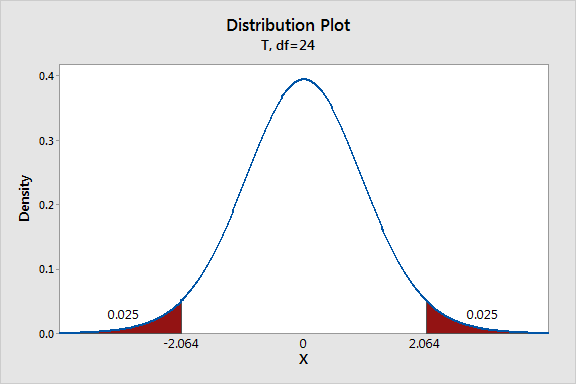
How To Create A Graphical Version Of The 1 Sample T Test In Minitab
µ µ0 HA.

. So the right tail probability for your t is between 010 column heading for t 144 and 005 column heading for t 194. Then the null hypothesis of the upper tail test is to be rejected if z z α where z α is the. Because pin tails have less surface area than other types of tails theyre going to be fitting into the wave tighter and giving you more control over your board.
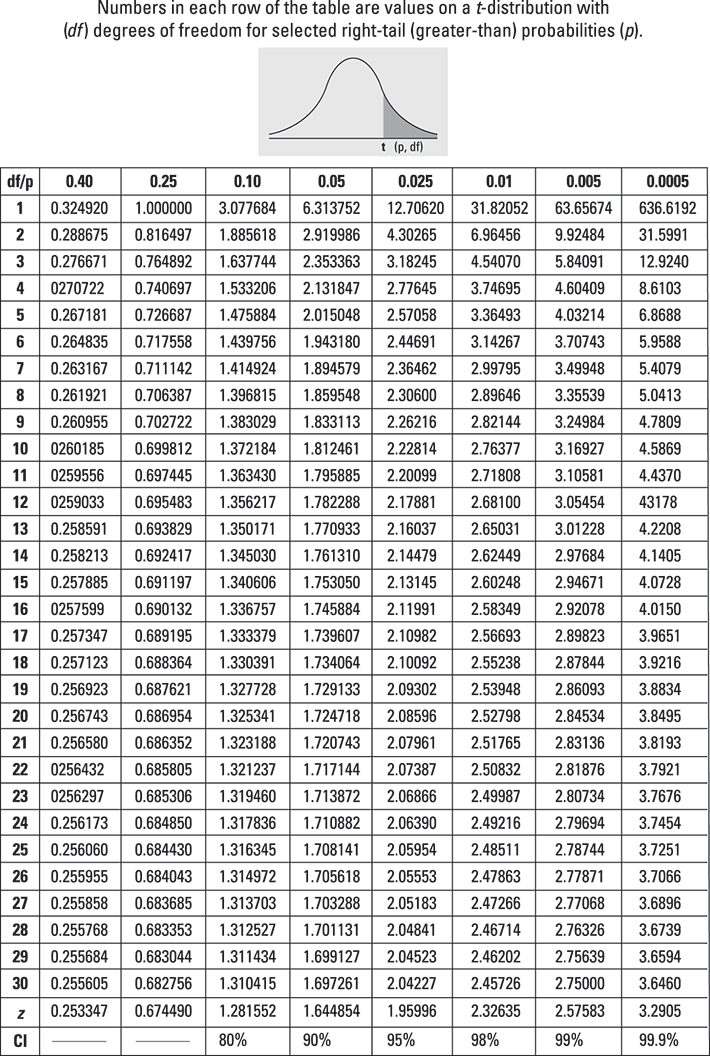
If the mean of the sample of interest is greater than the comparison mean. I was wondering if the P-value found from a t-table is the same for both lower and upper tailed. For example your t 160 is between t -values 144 and 194 df 6.
The R statements to get these values are qchisq 0125 11 and qchisq 0125 11 lowertailFALSE. Look up the critical value that corresponds with the alpha value. Upper Tail Right Tail Similarly the upper tail contains the upper values in a distribution.
We can get this directly with invNorm. As before the bottom portion is 1-upper_tail the only difference is that now the upper tail is equal to alpha2. Compute x using the destandardization formula.
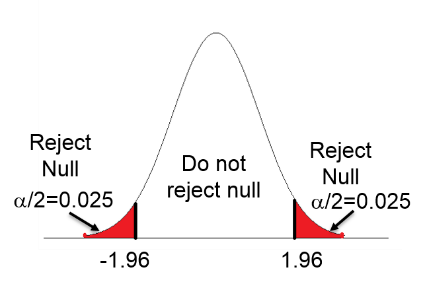
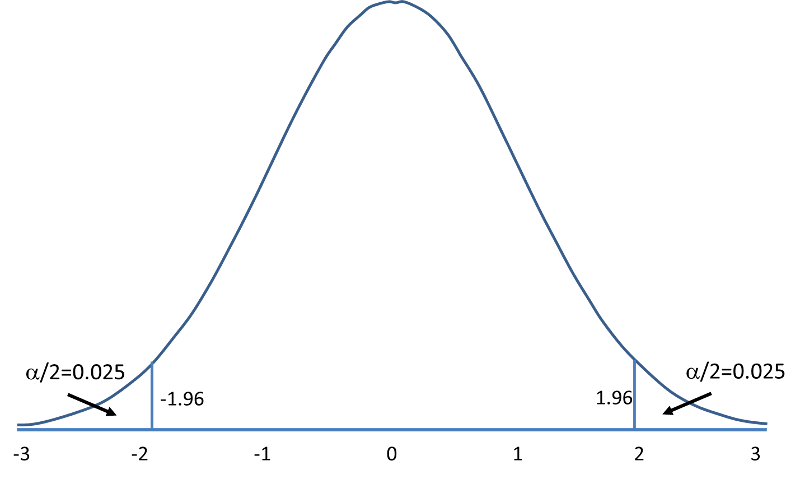
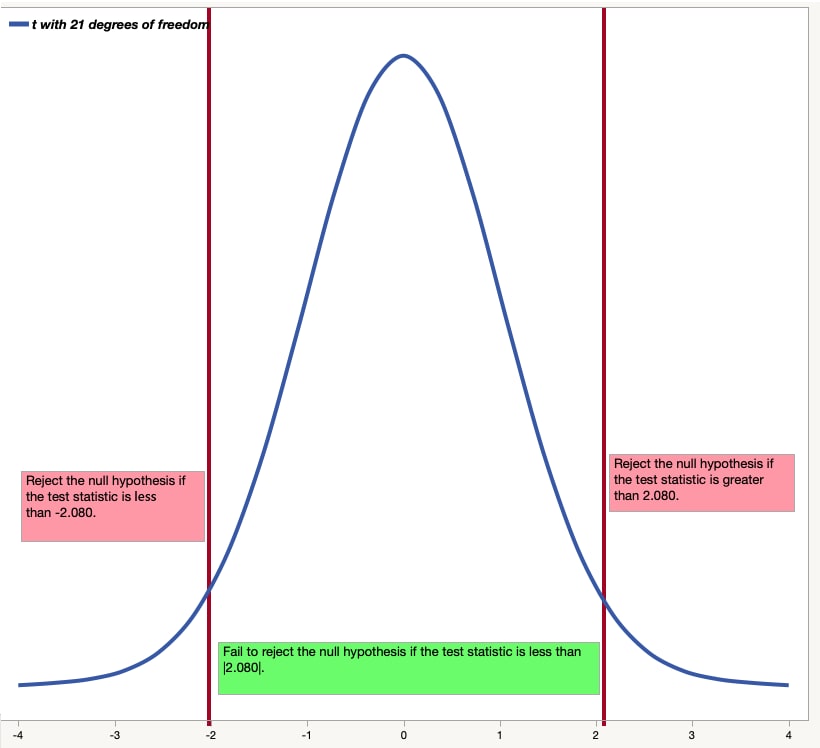
If Component A has a longer time-to-failure than Component B. In this example however the rejection region must be split between both tails of the distribution0025 in the upper tail and 0025 in the lower tailbecause your hypothesis specifies only a difference not a direction as shown in Figure 1a. Enter your desired alpha into a cell in Excel the upper tail in this case will be alpha2.
0 7 2 1 1-0927900721 1 0. Pval pnorm z lowertailFALSE pval upper tail p value. Note however that in the one-tailed test the value of the.
As it turns out to be greater than the 05 significance level we do not reject the null hypothesis that p 012. µ µ0 HA. X µ then rejection region lies on upper tail of the T-Distribution upper-tailed.
Find the value z of Z that cuts off a left or right tail of area c in the standard normal distribution. A man with more than 25 years of experience behind the planer for some insight. In a one-tailed test the critical region will have just one part the red area below.
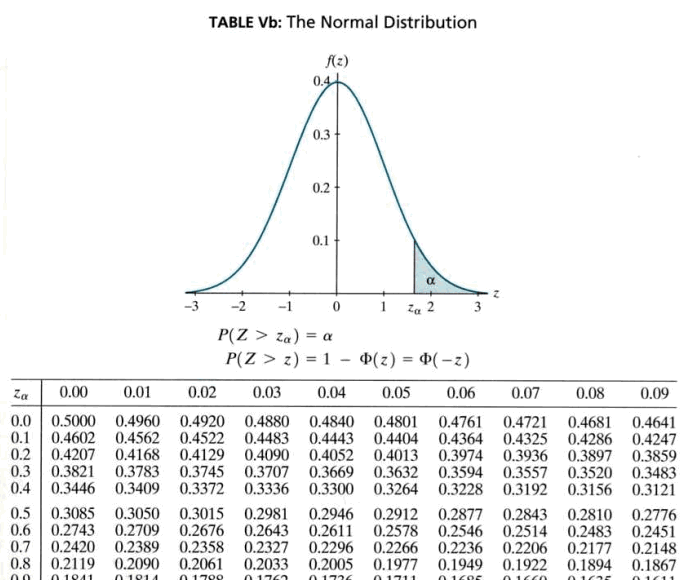
For a two-sided test find the column corresponding to 1-α2 in the table for upper-tail critical values and reject the null hypothesis if the test statistic is greater than the tabled value. To be 005 and I am investigating the lower tail not upper would my p-value still be 005 for lower tailed. But in an upper-tail test youre interested in the area to the right of the z z z -value not the area to the left.
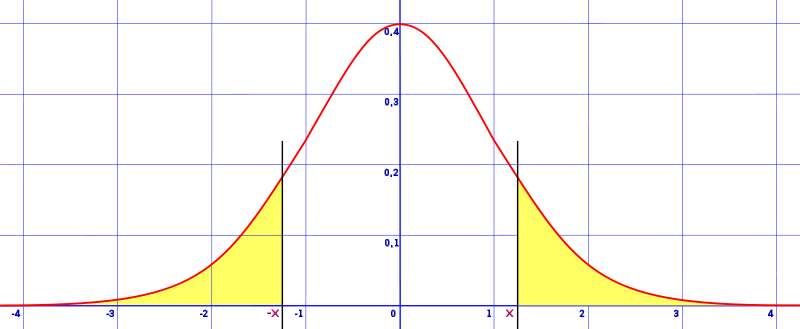
This means that we have P X x 1 0125 and P X x 2 0125. X μ z σ. The area under the density curve from the left critical value to the left is equal to α2 and the area under the curve from the right critical value to the right is equal to α2 as well.
One-tailed hypothesis tests are also known as directional and one-sided tests because you can test for effects in only one direction. If your data follows a normal distribution or if you have a large sample size n 30 that is approximately normally distributed you can use the z -distribution to find your critical values. µ µ0 Is the mean lower than µ0.
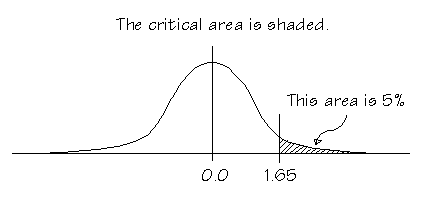
The area under the density curve from the critical value to the right is equal to α. If our sample value lies in this region we reject the null hypothesis in favour of the alternative. In the examples below I use an alpha of 5.
Both tests have a region of rejection then of 5 percent or 005. Please enter the necessary parameter values and then click Calculate. To find the area to the right you need to subtract the value in the z z z -table from 1 1 1.
Two-Tailed Test Lower-Tailed Test Upper-Tailed Test Sign for H0 or or Sign for HA Rejection region In both tails In the left tail In the right tail Ex203 Is the mean different than µ0. Calculate this value in another cell. The value for alpha can be thought of as the chance of rejecting H_0 the null hypothesis when in fact H_0 is actually true.
Lets say were testing H_0. In a z z z -table you find. As in the last example you decide to use a 5 percent probability level for the test.
When you perform a one-tailed test the entire significance level percentage goes into the extreme end of one tail of the distribution. 0 7 2 1. Similarly find the column corresponding to α 2 in the table for lower-tail critical values and reject the null hypothesis if the test statistic is less than the tabled value.
9 2 7 9 0. The row near the bottom with Z in the df column gives right-tail greater-than probabilities from the Z -distribution. Here P-value PrT t.
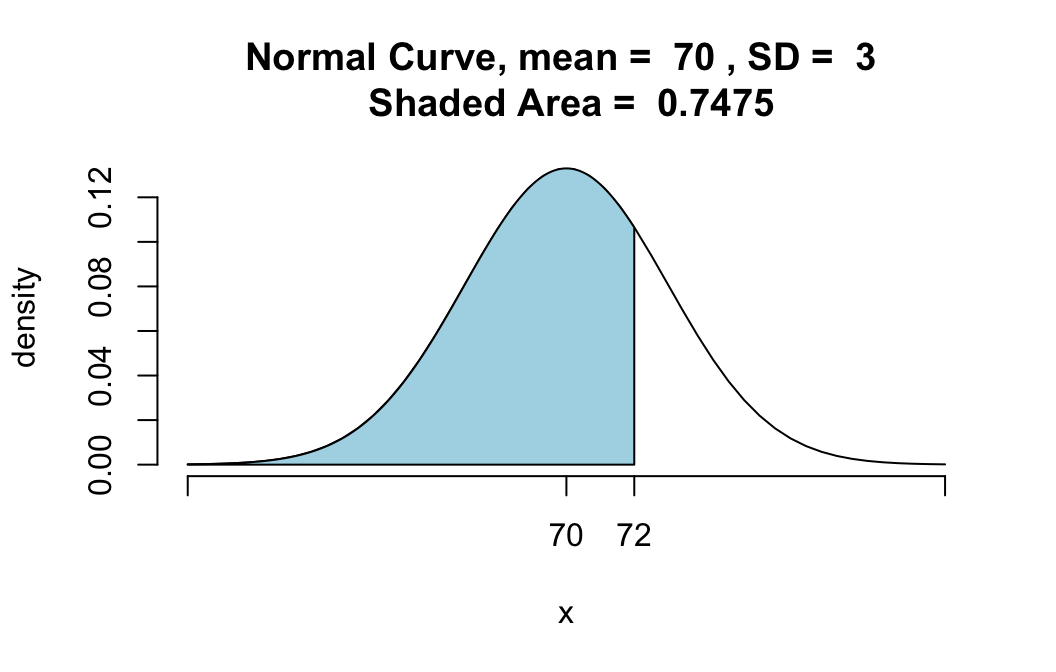
Suppose we are looking for a definite decrease. This calculator will tell you the one-tailed right-tail area under the standard normal curve given a Z-score ie the one-tailed probability from the z-score to positive infinity. P Xltxstar is equal to the area to the left of xstar so we are looking for the cutoff point for a left tail of area 09332 under the normal curve with mean 10 and standard deviation 25.
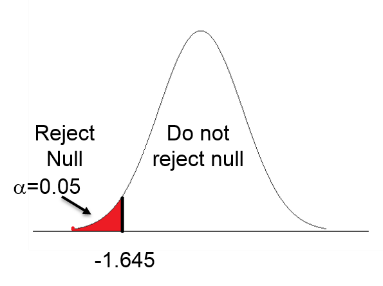
Then the critical region will be to the left. Where μ 0 is a hypothesized upper bound of the true population mean μ. To find the value x of X that cuts off a left or right tail of area c in the distribution of X.
The null hypothesis of the upper tail test of the population mean can be expressed as follows. Thus total area equals α. Instead of using the critical value we apply the pnorm function to compute the upper tail p-value of the test statistic.
9 2 7 9 0. One-Tailed Area Under the Standard Normal Distribution Calculator. Let us define the test statistic z in terms of the sample mean the sample size and the population standard deviation σ.
But if the area between the two values is 075 then the total tail area must be 025 square units. For a two-tailed interval divide your alpha by two to get the alpha value for the upper and lower tails. Use a z-table to reverse-lookup the z-value that gives the desired upper-tail area that area is alpha for a one-tailed test and alpha2 for a two-tailed test.
For instance lets say I find the P-value in this table. Calculate the bottom portion in. Thus the area to the left of x 1 must be 0125 square units and the area to the right of x 2 must be 0125 square units.
To give us the 101 on how your tail works we rang up the esteemed Wade Tokoro. Z is the z-score of x. Heres how to use the t -table to find t -values critical.
49 rows T-Statistics Reference Table - Upper Tailed Test - alpha Area under the curve for. µ µ0 Is the mean lower or still the same than µ0. So upper tail means the same thing as right tail.
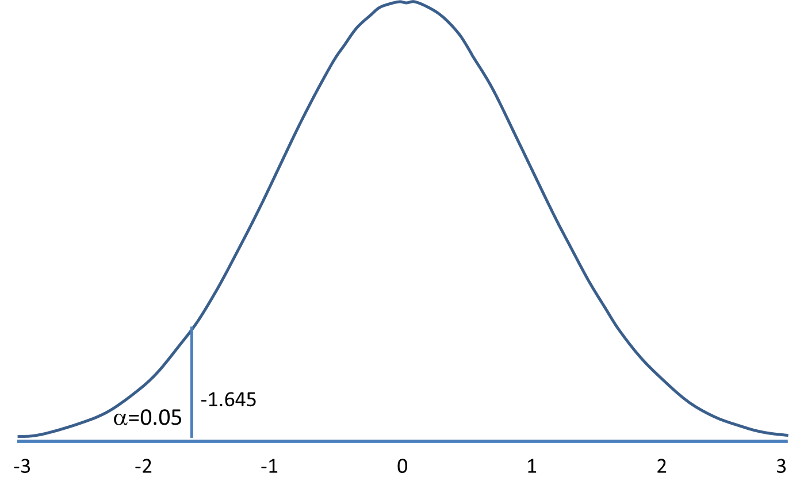
Hypothesis Testing Upper Lower And Two Tailed Tests
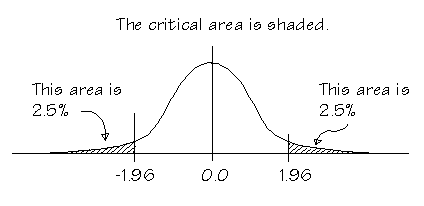
Chapter 17 Answers
Upper Tail And Lower Tail Definition Statistics How To

16 2 Finding Normal Probabilities Stat 414
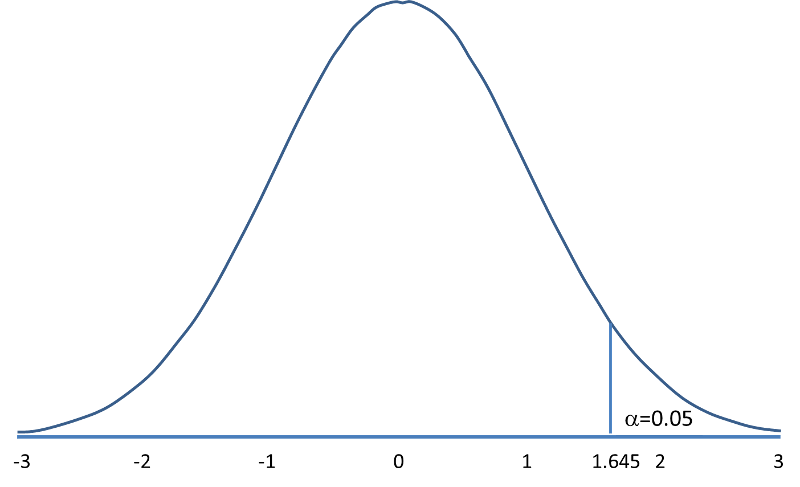
Hypothesis Testing Upper Lower And Two Tailed Tests
:max_bytes(150000):strip_icc()/dotdash_Final_Two_Tailed_Test_Sep_2020-01-b86f83d6c5f64f1a8e091d1cb0cd5f67.jpg)
Two Tailed Test Definition

Chebyshev S Inequality
Chapter 17 Answers
One Sample T Test
Hypothesis Testing Upper Lower And Two Tailed Tests
Upper Tail And Lower Tail Definition Statistics How To
16 2 Finding Normal Probabilities Stat 414
The T Distribution Introduction To Statistics Jmp
Upper Tail And Lower Tail Definition Statistics How To
How To Find Right Tail Values And Confidence Intervals Using The I T I Table Dummies
Using Qnorm
One Sample T Test
Upper Tail And Lower Tail Definition Statistics How To
One Sample T Test


Comments
Post a Comment